
My eleven year old has a waitlist. Not a wish list. A waitlist, of actual people, waiting to buy a thing from him.
I did not see that coming when this started, and the way it happened taught him more about money in about six weeks than I learned in my entire twenties.
Here’s how it went.
It started because he wanted a monitor
Cody wanted a monitor for his computer so he could play his games on a bigger screen. Standard kid want. And he wanted to earn the money for it himself, which I was thrilled about right up until I realized I had to actually create a way for that to happen.
So we sat down and I asked him a question I don’t think most kids get asked: do you want to be an employee, or do you want to be a business owner?
Employee means I give you jobs and pay you a flat rate. Predictable. Safe. You know exactly what you’re getting.
Business owner means you put money in first, you do all the work, and you keep what’s left. Riskier. Possibly nothing. Possibly a lot more.
He picked employee first
He absolutely did. And honestly, that was the right instinct for an eleven year old. Guaranteed money for guaranteed work is a completely reasonable position.
So we did the math. On paper. Both columns.
As an employee: we estimated the whole thing would take him about ten hours of work. At $15 an hour, which is VERY generous for an eleven year old, that’s $150. Guaranteed. Safe.
As the owner: he fronts the money, does the same ten hours, and keeps whatever’s left after he pays me back. If he sold all twelve, that was around $300.
Same work. Double the money.
The math changed his mind, not me. He made the call himself, out loud, looking at two numbers on a page. That’s a conversation I want him to remember having as a pre-teen.
The product
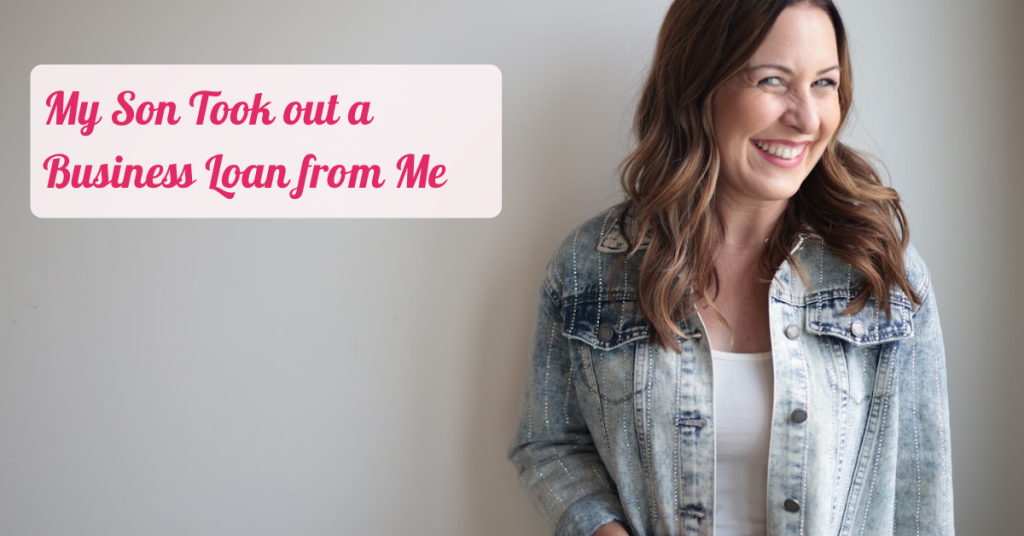
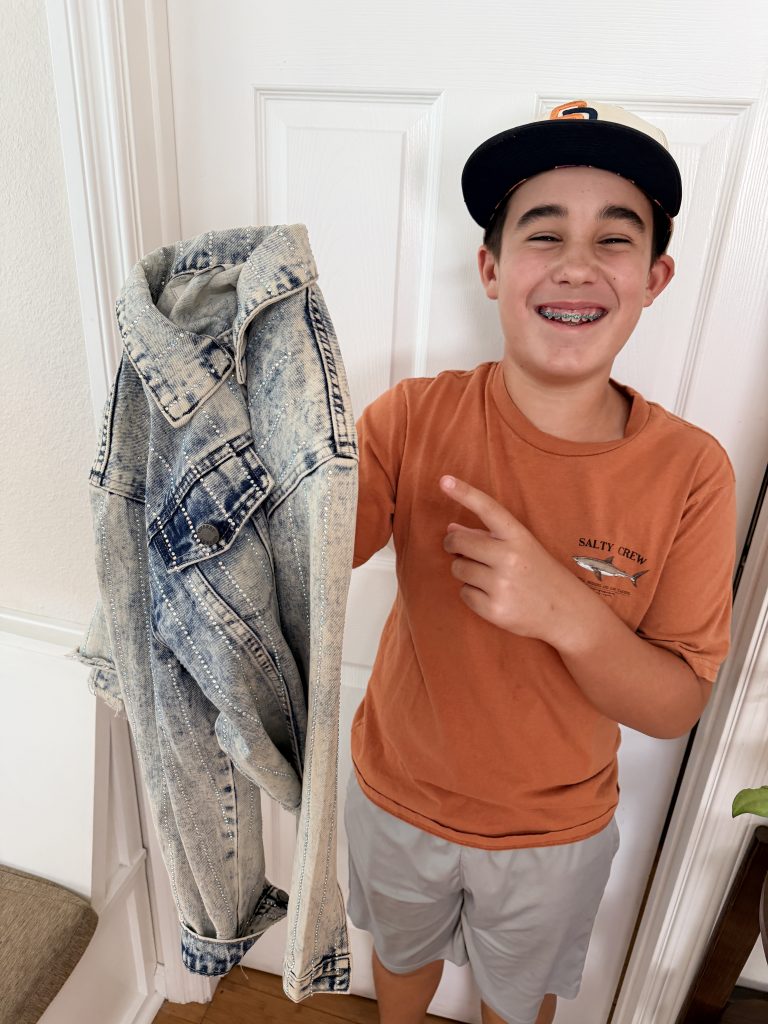
I wear these adorbs sparkle jackets when I’m traveling and at every conference I speak at, and I get stopped constantly about them. People ask me “What brand is that?” or “Where can I get one?” So I already knew there was demand. And because I can buy wholesale, there was a real margin sitting there.

So I offered it to him. I’ll front you the money as a loan, you buy the inventory, you do all the work, you pay me back, you keep the profit.
Not a gift. A loan. That distinction is the whole thing. He owed me that money whether he sold a single jacket or not.
On price, I told him to go with the retail price the company recommends. That’s not me being lazy, it’s a real lesson: somebody who knows this product has already done the work of figuring out what it’s worth, and undercutting it to feel safe is how new business owners quietly delete their own profit.
He bought 12 sparkle jackets with his loan.
He sold out
All twelve. Marketed them himself on social (using my audience and followers), showed them to people, followed up with the ones who were interested.
Then he did the parts nobody pictures when they imagine having a business. He learned how to make shipping labels with PirateShip. He packaged every order in a poly mailer. He wrote a handwritten note for each one and added a sticker to the package before requesting a USPS Package Pickup from our doorstep.
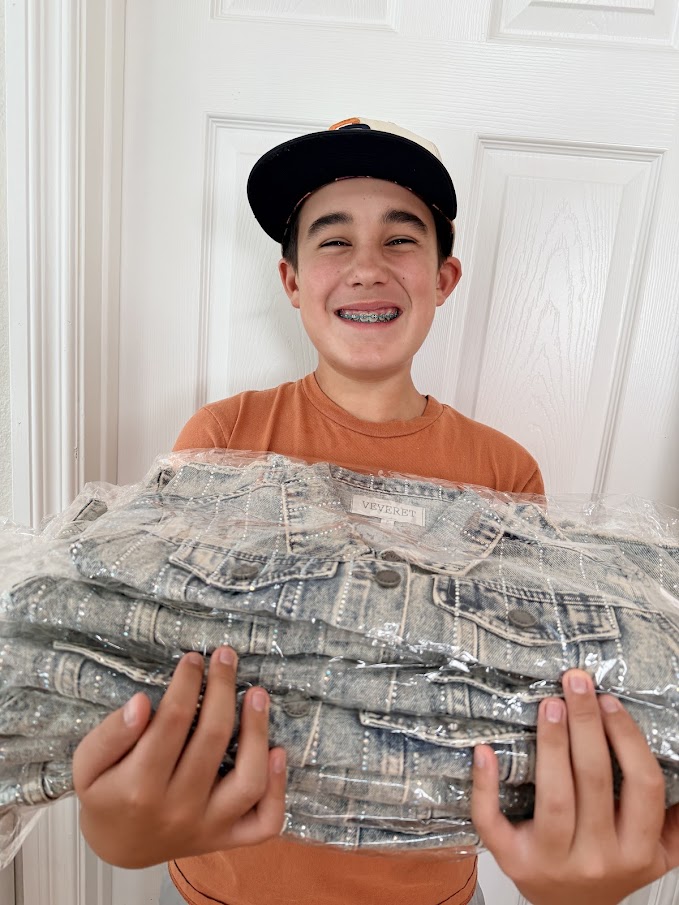
That’s the bit I’m proudest of. The handwritten notes were the best. Many said things like “Dear Gavin’s Mom. Thank you for buying my moms sparkle jacket. I hope you like it. -Cody”
And then he met Stripe fees
Oh, he was furious.
He had a number in his head, and then the payments came in slightly smaller than the number, and he wanted to know who exactly was taking his money and why.
Welcome to business, buddy.
Honestly, this was one of the most valuable twenty minutes of the whole project. Every business has a cost of doing business. Processing fees, platform fees, shipping supplies, the stuff that quietly sits between the price on the tag and the money in your hand. He is 11 and he now knows that gross and net are two different numbers, which is more than plenty of grown adults running businesses can say.
He paid me back and cleared about three hundred dollars. And now there’s a waitlist for Cody’s Magic Sparkle Jackets, which means round two is a real conversation and not a favor from his mother. You can get on the waitlist here if you want one when he restocks.
He got the monitor. Then he moved the goalposts.
He bought it. Earned it, paid for it, plugged it in.
And then, about as fast as you’d expect, the goal became a gaming PC.
I know how that sounds. But watch what actually happened: the target got bigger, and he already knows exactly which lever to pull. He isn’t asking us for it and he isn’t waiting for birthday money. He has a product, a waitlist, and a working idea of what ten hours of his own effort is worth in two different configurations.
That’s the whole thing, right there. A kid who wants something expensive is normal. A kid who responds to wanting something expensive by looking at his inventory is the entire point of the exercise.
Meanwhile, his sister has a $5000 problem
Makenzie is 13 and has an eighth grade East Coast trip coming, and it’s close to $5000 to go. She is fundraising and working toward it.
That number is enormous to a 13 year old, and I’ve resisted the urge to make it disappear for her, because a goal that big is the best financial teacher money can’t buy.
She did a babysitting certification through Girl Scouts, which means she has a real credential and a real earning path that has nothing to do with us. She figured out she got the most jobs when she handed out a calendar of her availability to the neighbors. She can go get money from the world, not from her parents. That’s a different feeling entirely, and she knows it.
The system underneath all of it
None of this works without a boring structure holding it up. Ours has three buckets.
Expectations. Things you do because you live here, and we kindly give you $10 a week in allowance. Tidying, laundry, dishes. Cody does the dishes daily, Makenzie does the kids’ laundry weekly. One has to pick up the doggy poop and the other waters the house plants.
Expenses. Things they fund themselves. When we started the $10 a week allowance, we also stopped buying them stuff. Sure, we buy them shoes, clothes and food. The necessities. But anything “extra” to splurge on, or a “toy,” comes out of their own money.
The cards
They each have a Greenlight card, and that’s where all of it lands. Our kids have had one for years now so they can check their balance and use their own card for purchases.
Cash disappears into a drawer (or gets lost in a pile on a desk) and stops being real. A balance they can see is a running scoreboard. Every purchase becomes a decision made on purpose instead of a handful of bills they found.
It also means we stop explaining saving and they just watch the number move.
Makenzie is definitely the saver. She has a pretty solid balance in her Greenlight account and doesn’t splurge and spend randomly. Cody is the spender and usually has below $10 in his. One time he tried to buy baseball cards at a Padres game and his card was declined. Yep, that’s real life, buddy. Got to wait until you have more in your account.
That Greenlight link is my referral link, which means we both get a little something if you sign up. We’ve used it for years either way.
Beyond the allowance
Having a business in the house is an unfair advantage here, and I use it. If they want to make more than $10 a week, they have to earn it. Here are other ways the kids can earn some cash:
→ Around the house: cleaning the office (and bathroom), yard work beyond the standard, organizing the pantry or garage
→ In the business: packing and prepping shipments, filing, helping with content, testing things before they go out, counting inventory, supervised data entry
→ Brain gigs: research this, compare these, come back with a recommendation
Steal this
If any of these ideas resonated with you, steal them for your own kids! It takes a village, amiright? You don’t need all of this on day one. We didn’t have it.
→ Pick two things that are expectations and give them a small weekly allowance.
→ Pick two things that are real gigs and pay a flat rate per job.
→ Put the money somewhere visible. A Greenlight card or even a jar for safe-keeping.
→ If you have a business, let them touch it. The real one, not a pretend version.
→ Show them both columns. The guaranteed number and the risky one, side by side, and let them pick.
→ And if they want something big, resist paying for it. Let them work for it.
Our kids will inherit whatever we model, not whatever we explain. If they watch us build something and never once see how the money moves, we’ve taught them that it’s magic and it happens to other people.
I’d rather they know it’s just work, priced correctly, done consistently. Minus the Stripe fees.
xx, Becky
Leave a Reply